 Merken
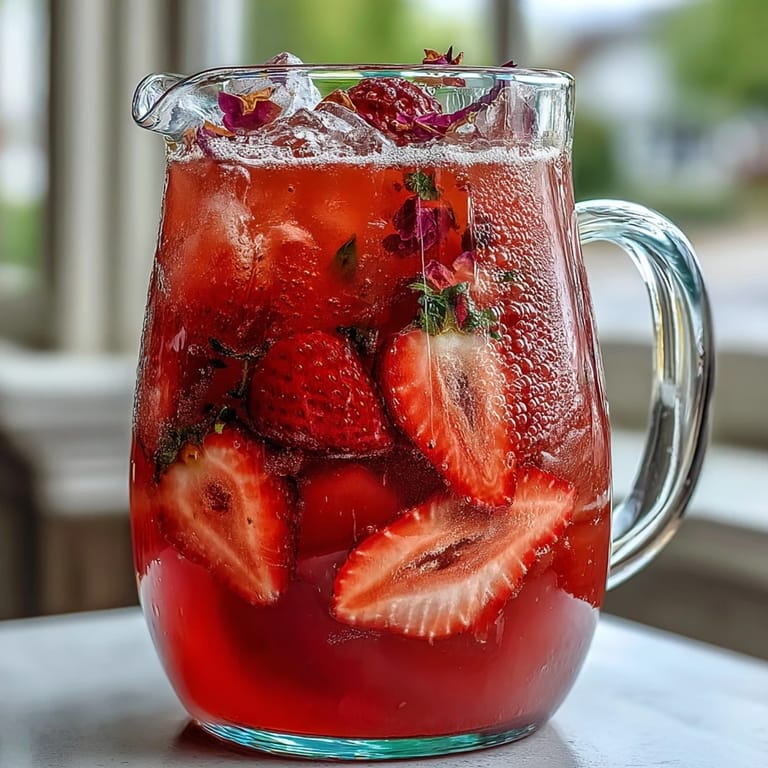
 My neighbor showed up one Saturday morning with a basket of strawberries so perfect they practically glowed, and honestly, I panicked trying to figure out what to do with them before they went soft. That's when she mentioned rose water—something her grandmother kept in an old glass bottle—and suddenly lemonade felt like it had possibilities beyond the ordinary. The first pitcher I made turned into something unexpectedly elegant, the kind of drink that made people pause mid-conversation to ask what was in it.
I served this at a garden party where someone's grandmother tasted it and got quiet for a moment—not in a bad way, but like she was remembering something. She asked for the recipe right there, which felt like the highest compliment possible. After that, it became my go-to for any outdoor gathering where I wanted something that looked as good as it tasted.
Ingredients
- Fresh strawberries (1 cup, about 150 g): They're the star here, so pick ones that smell like strawberries and feel firm to touch—overripe ones muddle into mush instead of releasing their juice cleanly.
- Freshly squeezed lemon juice (1 cup, about 240 ml): Bottled won't give you that bright edge; fresh lemons take five extra minutes and completely change the flavor profile in a way that matters.
- Cold water (4 cups, 1 liter): The foundation, kept chilled so the whole pitcher stays refreshing without needing to drown it in ice.
- Granulated sugar (1/3 cup, about 65 g): Start with this amount and taste as you go—different strawberries have different sweetness, and you might want more or less than you expect.
- Rose water (1 to 2 tablespoons): This is where restraint wins; it sneaks up on you, and a tablespoon too much turns delicate into perfume-y, so add slowly and taste between additions.
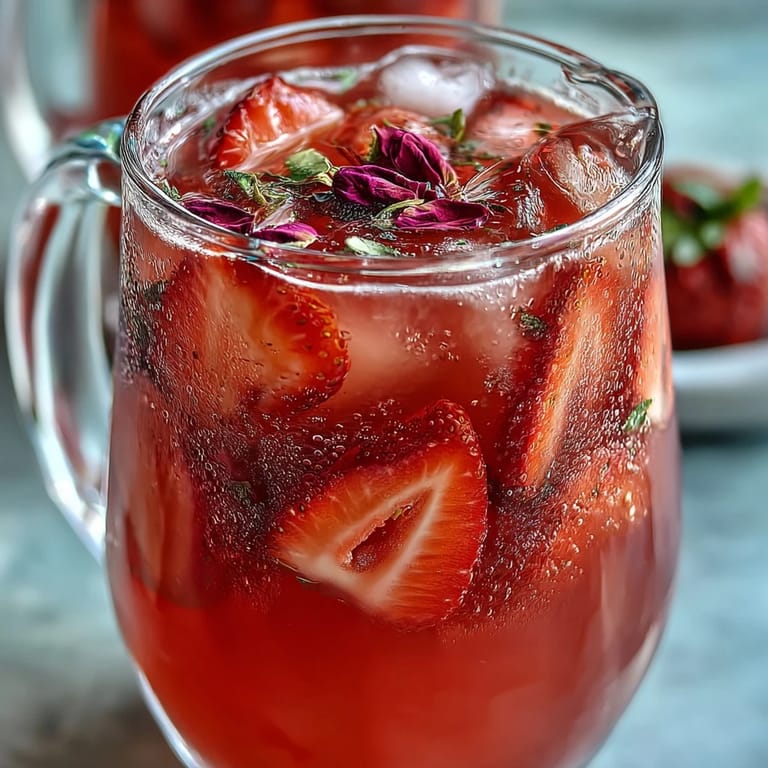
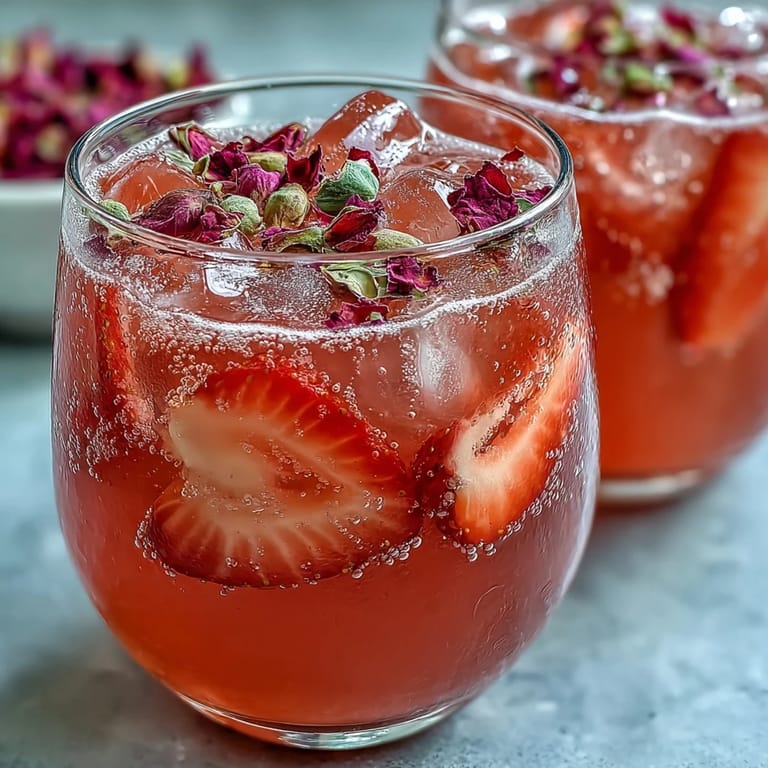
- Fresh strawberry slices, lemon wheels, edible rose petals, fresh mint, and ice (for garnish): These transform the pitcher from a drink into something people want to photograph, and honestly, that matters when you're serving something this pretty.
Tired of Takeout? 🥡
Get 10 meals you can make faster than delivery arrives. Seriously.
One email. No spam. Unsubscribe anytime.
Instructions
- Start with the strawberries and sugar:
- Slice your strawberries into the pitcher and sprinkle the sugar over them, then use a wooden spoon to gently press and twist them together—you want to hear the juice release, see them soften slightly, but you're not making jam here. This takes about a minute, and the smell alone tells you you're on the right track.
- Add the lemon juice and rose water:
- Pour in your fresh lemon juice and start with just one tablespoon of rose water, stirring well so the sugar dissolves into the fruit juices. Taste it at this point before adding more rose water—that initial taste tells you if you need to adjust.
- Pour in the water and adjust:
- Add your cold water slowly, stirring as you go, then taste again and fine-tune the sweetness or rose intensity. This is the moment where your pitcher goes from ingredients to an actual beverage, and it's when you realize how much control you have over your own drink.
- Chill and garnish:
- Add ice cubes generously, stir everything together so it's evenly cold, then top with your strawberry slices, lemon wheels, rose petals, and mint sprigs right before serving. The garnish keeps things visually interesting as people pour, and it hints at what they're about to taste.
 Merken
 There was an afternoon when my daughter's friend came over and asked if she could help make the lemonade, and suddenly it became less about the task and more about her learning that real drinks come from real fruit, not powder packets. We squeezed lemons together and she got to muddle the strawberries, and when she tasted it and grinned, I realized that this recipe had become a small kitchen moment instead of just a beverage.
When Rose Water Goes Wrong (and How to Fix It)
The first time I made this without tasting as I went, I used two full tablespoons of a particularly potent rose water and ended up with something that smelled like a perfume counter. The lesson stuck with me: rose water is not something you measure confidently—it's something you add with caution and respect. Now I keep a second pitcher nearby just for adding water back in if needed, because it's easier to dilute than to start over.
Why Fresh Lemon Juice Actually Matters Here
Bottled lemon juice has this flat, one-note quality that makes lemonade taste like lemonade, whereas fresh juice has brightness and complexity that makes this particular drink taste expensive and thoughtful. The acidity is different, the flavor is cleaner, and I promise that once you taste the difference, you'll never go back to the bottle version for something this simple. It takes an extra five minutes, which is genuinely worth it when the whole recipe is only fifteen minutes to begin with.
Variations and Ways to Make It Your Own
This lemonade is a foundation, not a rule, and some of the best versions I've made came from playing around with what I had on hand. Honey or agave syrup swap in beautifully for sugar if you prefer a different sweetness, and if you're making this for adults, a splash of gin or vodka added just before serving turns it into something elegant enough for an actual cocktail party. The sparkling water version shows up at my house constantly too—half regular water, half sparkling water added at the last second keeps all the delicate flavors bright without making it taste fizzy in a hard way.
 Merken
 This pitcher of lemonade became the drink I make when I want to feel like I'm hosting something special without spending hours in the kitchen. It's simple enough that anyone can make it, but thoughtful enough that it tastes like you actually tried.
Rezept FAQ
- → Wie kann ich den Rosen-Geschmack intensivieren?
Beginnen Sie mit 1 Esslöffel Rosenwasser und erhöhen Sie die Menge langsam nach Geschmack, um eine ausgewogene blumige Note zu erzielen.
- → Kann ich Zucker durch andere Süßungsmittel ersetzen?
Ja, Agavendicksaft oder Honig eignen sich gut als Alternativen und verleihen eine angenehme Süße.
- → Wie bereite ich die Erdbeeren optimal vor?
Die Erdbeeren sollten hulliert und in Scheiben geschnitten werden, um ihre Säfte beim leichten Muddeln freizusetzen, ohne sie zu zerstampfen.
- → Ist diese Mischung für vegane Ernährung geeignet?
Ja, alle verwendeten Zutaten sind pflanzlich und glutenfrei, somit ideal für vegane und glutenfreie Ernährungsweisen.
- → Wie lange kann das Getränk aufbewahrt werden?
Im Kühlschrank hält sich die Limonade bis zu 4 Stunden, damit sich die Aromen optimal miteinander verbinden.