 Merken
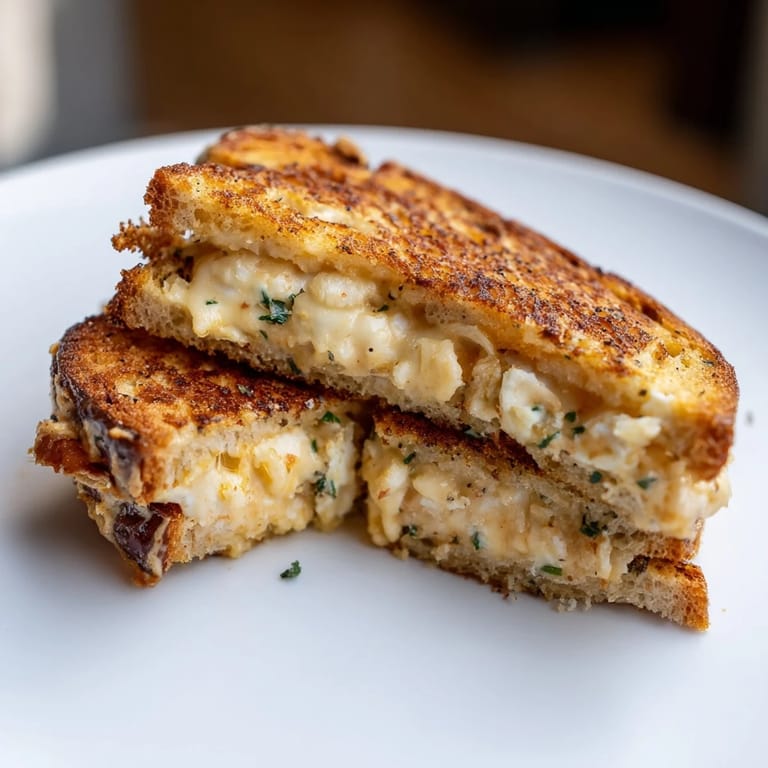
 There's something about a grilled cheese that makes you feel like you're solving a problem, even when you're not. One lazy Sunday afternoon, I was staring at a half-empty jar of mayonnaise and a bulb of garlic, wondering why every grilled cheese I made tasted a bit one-note. That's when it hit me: what if I treated the outside of the sandwich like a canvas instead of just slapping butter on it? The garlic mayo changed everything—suddenly the bread was singing, crispy and golden without any of that greasy heaviness.
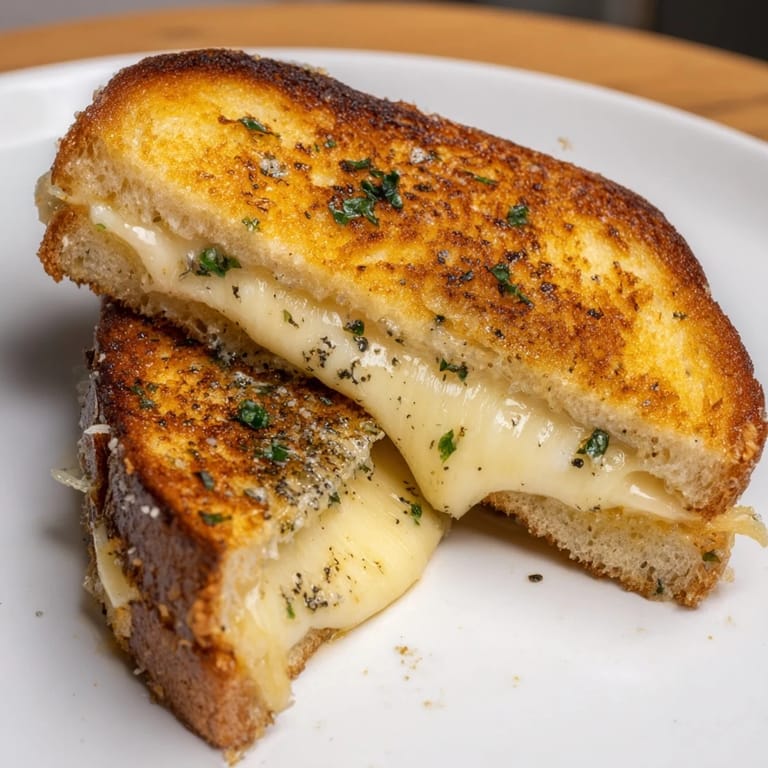
I made this for my roommate on a Wednesday night when we were both tired and hungry, and he asked if I'd gotten it from some fancy deli. I watched him take that first bite, the cheese stretching between the bread, the garlic hitting him right away, and just laughed—because the magic wasn't in some secret technique, it was just in paying attention to every single layer.
Ingredients
- Sourdough bread (4 slices): The tang and structure hold up beautifully to the garlic mayo; the crust becomes almost lacey at the edges if you use day-old bread.
- Sharp cheddar cheese (4 slices): Don't skip the sharpness—mild cheddar melts fine but tastes forgettable in this context.
- Mozzarella cheese (2 slices, optional): Adds a secondary melt and stretch; if you include it, your cheese layers get more interesting texture.
- Mayonnaise (3 tablespoons): This is your new butter; use a full-fat brand and don't be tempted to thin it out.
- Garlic clove (1 large, finely minced): The size matters because finely minced garlic distributes evenly and cooks into the mayo without burning.
- Fresh parsley (1 teaspoon, optional): A whisper of brightness that prevents the mayo from feeling heavy; honestly optional but quietly excellent.
- Black pepper (1/4 teaspoon): Toast it in your mind as you crack it—it should taste alive on your tongue, not dusty.
- Dijon mustard (1 tablespoon, optional): A thin layer inside adds complexity and cuts through the richness without announcing itself.
Tired of Takeout? 🥡
Get 10 meals you can make faster than delivery arrives. Seriously.
One email. No spam. Unsubscribe anytime.
Instructions
- Make your garlic mayo:
- Combine mayonnaise, finely minced garlic, parsley if using, and black pepper in a small bowl, stirring until the garlic is evenly distributed and no clumps remain. Taste it—the garlic should be noticeable but not raw or sharp.
- Prep your bread:
- Lay out all four slices of sourdough. If using mustard, spread a thin layer on the inside of two slices; this is your flavor anchor.
- Build the sandwich:
- Layer two slices of cheddar and one slice of mozzarella (if using) between the two mustard-lined bread slices, then sandwich with the plain bread slices so the cheese is tucked in the middle.
- Coat with garlic mayo:
- Spread the garlic mayo evenly on all four outer surfaces of both sandwiches—top, bottom, and both sides. Thin and even coverage is the goal so every inch browns.
- Heat your cooking surface:
- Place a nonstick skillet or griddle over medium-low heat and let it warm for two minutes; if it's too hot, the outside burns before the cheese melts, so patience here matters.
- Cook until golden and melted:
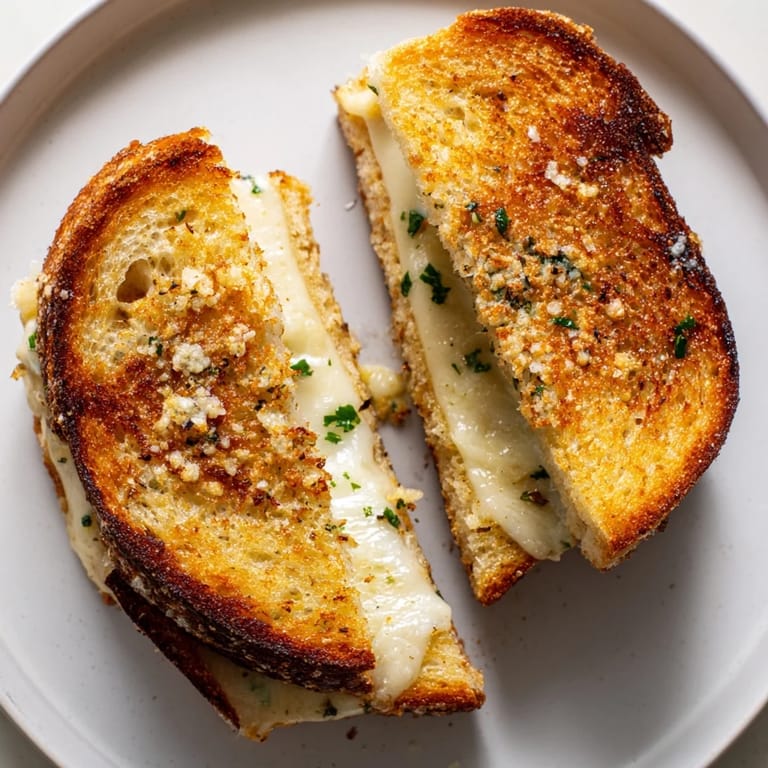
- Place both sandwiches on the skillet and cook for three to four minutes without moving them, then flip gently using a spatula and cook the other side for another three to four minutes until the bread is deeply golden and crisp and the cheese has visibly melted inside. Press down very gently with your spatula only once, halfway through each side, to encourage even contact.
- Rest and serve:
- Remove the sandwiches from the pan and let them sit for one minute—this allows the cheese to set slightly so it doesn't ooze out when you cut. Slice diagonally and serve immediately while the edges are still crackling.
 Merken
 I realized something that night: a grilled cheese doesn't need to be complicated to feel special. It just needs you to think about it for a moment.
Why Sourdough Matters Here
Sourdough's natural tang pairs with garlic in a way that makes sense—neither flavor overpowers the other. The crust also has structure, so it doesn't turn into mush under the heat; instead, it browns in uneven patches that are somehow more interesting than a perfectly even golden color. If you use regular white bread, the sandwich becomes one-dimensional, nice enough but forgettable.
Cheese Combinations That Work
Sharp cheddar is the anchor because it has personality and stands up to the garlic without fading into the background. Mozzarella adds a secondary texture if you want stretch and pull—that moment when you bite through and the cheese follows your bite. Swiss or Gruyère both work beautifully if you want something earthier and less sharp; pepper jack if you like heat creeping in underneath everything else.
Small Tweaks That Change Everything
The beauty of this sandwich is that it's flexible without being chaotic. You can layer in sliced tomatoes if you need brightness, or caramelized onions if you want deep sweetness that grounds the garlic. A pinch of chili flakes mixed into the mayo creates heat that builds as you eat. The Dijon mustard on the inside is optional but genuinely changes the flavor profile—it adds a little sharpness that keeps the richness from feeling heavy.
- Add thinly sliced tomatoes or caramelized onions for layers of flavor and texture.
- Mix a small pinch of chili flakes into the mayo if you want subtle heat building throughout.
- Experiment with Swiss, Gruyère, or pepper jack cheese to find your preferred flavor profile.
 Merken
 This sandwich tastes best fresh and hot, when the cheese is still molten and the edges are still snapping under your teeth. Make it, eat it, move on with your day better than you started it.
Rezept FAQ
- → Wie wird die Knoblauch-Mayo zubereitet?
Mayonnaise mit fein gehacktem Knoblauch, Pfeffer und optional frischer Petersilie gut verrühren.
- → Welches Brot eignet sich am besten?
Sauerteigbrot sorgt für optimale Knusprigkeit und Geschmack beim Rösten.
- → Kann man andere Käsesorten verwenden?
Ja, Swiss, Gruyère oder Pepper Jack bieten unterschiedliche Geschmacksprofile.
- → Wie wird das Sandwich am besten knusprig?
Außen mit Knoblauch-Mayo bestreichen und in mittlerer Hitze langsam goldbraun braten.
- → Gibt es Variationen zum klassischen Belag?
Zusatz wie karamellisierte Zwiebeln, Tomatenscheiben oder Chiliflocken bringen zusätzliche Aromen.