 Merken
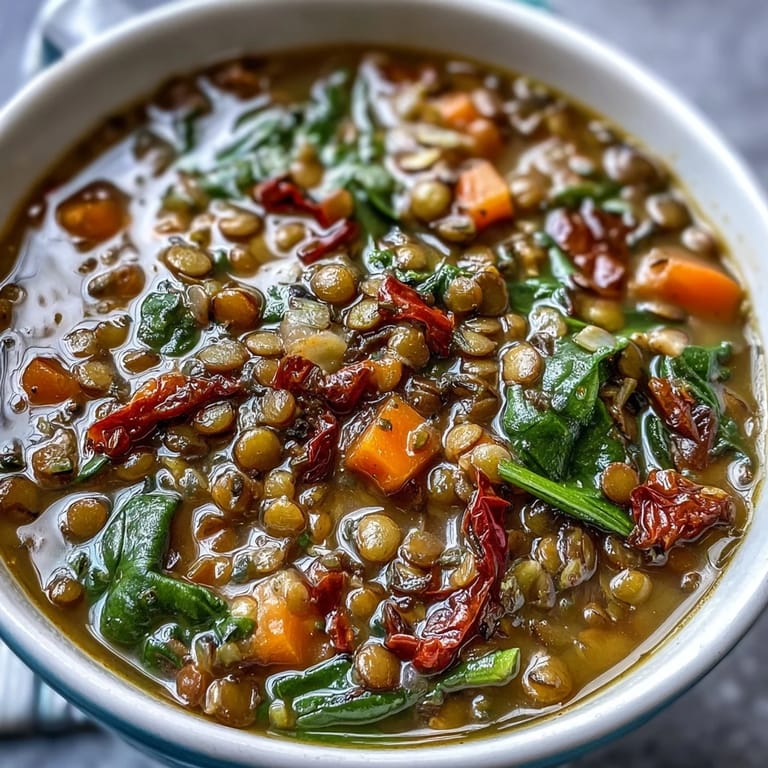
 Years ago, I found myself stirring a pot of lentil soup on a gray Tuesday afternoon, the kind where the kitchen felt like the only warm place in the house. My neighbor had mentioned her grandmother's version during a fence conversation, nothing fancy, just lentils and whatever vegetables needed using up. What struck me was how something so simple could transform a whole mood, filling the apartment with this earthy, comforting smell that made everything feel manageable again.
I made this soup for my partner during their first rough week at a new job, and watching them eat three bowls while telling me about their day taught me something about nourishment that recipes don't usually mention. There's a generosity in offering someone a warm, filling bowl of something you made with your own hands, especially when they're running on fumes.
Ingredients
- Dried brown or green lentils (1 cup, 200g): Brown lentils hold their structure better than red ones, which is exactly what you want here; always rinse them first because you'd be surprised how much dust hides in there.
- Olive oil (2 tablespoons): This is your foundation, warming up before the vegetables arrive to create that first layer of flavor.
- Onion, garlic, carrots, and celery: This is the holy trinity plus one, the backbone that makes soup taste like someone cares.
- Zucchini and red bell pepper: These add brightness and just enough sweetness to balance the earthiness of the lentils.
- Fresh or canned tomatoes (1 cup, 150g): Canned works beautifully here; the acidity adds depth that fresh tomatoes sometimes miss.
- Vegetable broth and water (4 cups plus 2 cups): The ratio matters because you want enough liquid for the lentils to swim in without becoming porridge.
- Fresh spinach or kale (2 cups, 60g): Add this at the very end so it stays vibrant and you actually taste the green instead of gray leaves.
- Cumin, thyme, smoked paprika (1 teaspoon, 1 teaspoon, ½ teaspoon): These three spices are doing the heavy lifting; the smoked paprika especially adds a warmth that makes people wonder what your secret is.
- Bay leaf, salt, and black pepper: The bay leaf infuses quietly, and salt isn't optional here, it's how you make everything taste like itself.
- Optional parsley and lemon wedges: These are the finishing touches that say you didn't just throw this together, even if you did.
Tired of Takeout? 🥡
Get 10 meals you can make faster than delivery arrives. Seriously.
One email. No spam. Unsubscribe anytime.
Instructions
- Build your flavor base:
- Pour olive oil into a large pot over medium heat and let it shimmer for a moment before adding diced onion and minced garlic; you're looking for softness and that first whisper of sweetness after about 2 to 3 minutes.
- Add structure with vegetables:
- Toss in the carrots, celery, zucchini, and red bell pepper, stirring occasionally as they soften over the next 5 minutes; this is when your kitchen starts smelling like something intentional.
- Wake up the spices:
- Sprinkle in cumin, thyme, smoked paprika, salt, and pepper, stirring constantly for about a minute until the aroma shifts from vegetable steam to something warmer and more complex.
- Bring everything together:
- Add your rinsed lentils, diced tomatoes, vegetable broth, water, and bay leaf; bring the whole thing to a boil, which usually takes about 5 minutes if you're paying attention.
- Let time do the work:
- Reduce the heat, cover the pot, and simmer for 25 minutes while the lentils absorb the broth and become tender; resist the urge to peek constantly, though honestly, the smell alone is worth one or two peeks.
- Finish with green:
- Stir in your spinach or kale and cook for 2 to 3 minutes just until wilted, then fish out that bay leaf because nobody wants to bite into one accidentally.
- Taste before serving:
- Adjust salt and pepper to your preference; ladle into bowls and finish with fresh parsley and a squeeze of lemon if you're feeling fancy.
 Merken
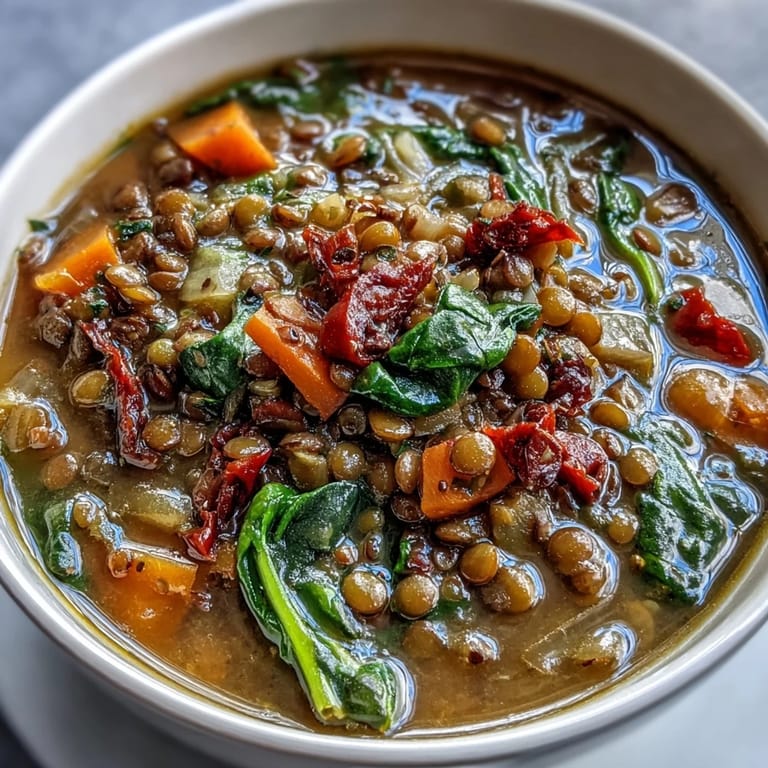
 One winter evening, a friend who usually avoids vegetables for what she calls mysterious reasons ate two servings without realizing she'd just consumed handfuls of zucchini, carrots, and bell pepper. That's when I understood that a good soup doesn't trick people, it just makes everything taste like it belongs there together.
The Beauty of Flexibility
This soup is genuinely forgiving about which vegetables you use, which is part of why I keep making it year-round. In autumn I'll add diced sweet potato or butternut squash where the zucchini was, and in spring I'll throw in fresh green beans or snap peas near the end. The lentils stay constant while everything else shifts with the season, which feels like a good metaphor for cooking in general.
Adjusting Heat and Flavor
If you like your soup with a little fire, a pinch of chili flakes added with the other spices brings a gentle warmth that builds with each spoonful. For something deeper, you could swap half the vegetable broth for mushroom broth, or even add a tablespoon of tomato paste in step 3 to intensify that savory note.
Serving and Storage Wisdom
This soup actually rewards patience because the flavors meld and deepen overnight, so if you can make it a day ahead, do. It freezes beautifully in individual portions, which means you've essentially created future meals for yourself on days when cooking feels impossible.
- Crusty bread transforms this from a side into a complete meal that satisfies something deeper than just hunger.
- A dollop of yogurt or a sprinkle of crispy fried onions on top adds texture that changes everything.
- If you're doubling this recipe, the cooking time stays roughly the same since the pot just needs more volume, not more time.
 Merken
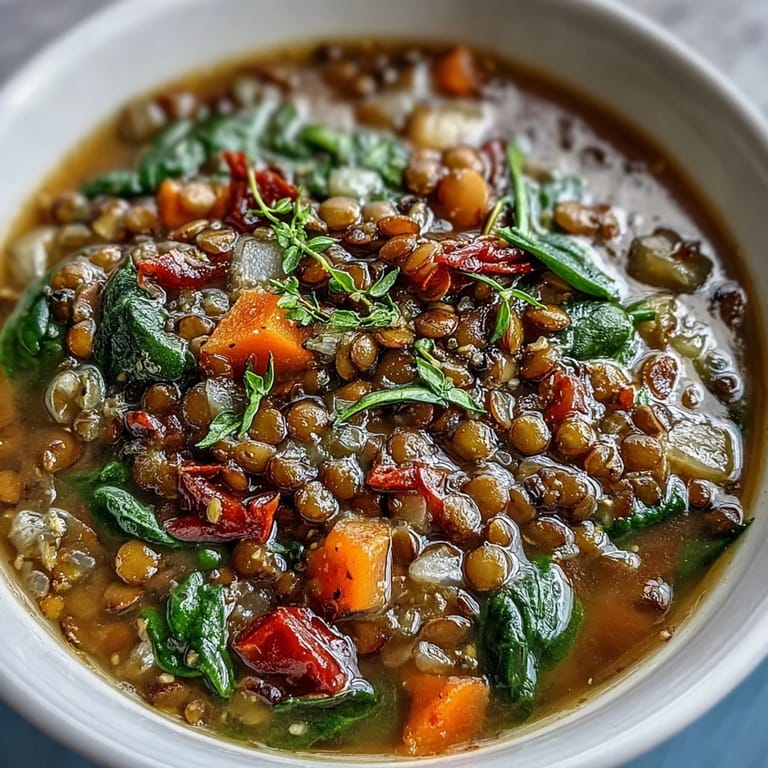
 Every time I make this soup, it reminds me that the best meals are often the simplest ones, the kind where the ingredients speak for themselves and you're just there to help them along. That's worth returning to, season after season.
Rezept FAQ
- → Wie lange hält sich die Linsensuppe im Kühlschrank?
Die Suppe hält sich im verschlossenen Behälter bis zu 4 Tage im Kühlschrank. Die Aromen setzen sich durch und intensivieren sich sogar noch.
- → Kann ich die Suppe einfrieren?
Ja, diese Linsensuppe eignet sich hervorragend zum Einfrieren. In luftdichten Behältern hält sie sich bis zu 3 Monate im Gefrierfach.
- → Welche Linsen eignen sich am besten?
Braune oder grüne Linsen behalten ihre Form beim Kochen und sind daher ideal. Rote Linsen zerfallen schneller und eignen sich eher für cremige Suppen.
- → Wie kann ich die Suppe noch proteinreicher machen?
Füge zusätzlich eine Dose abgetropfte Kichererbsen hinzu oder serviere die Suppe mit einer Scheibe Vollkornbrot für mehr Protein und Sättigung.
- → Welches Gemüse kann ich austauschen?
Saisonales Gemüse wie Süßkartoffeln, Kürbis, grüne Bohnen oder Erbsen passen hervorragend. Die Basis aus Karotten, Sellerie und Zwiebeln bleibt jedoch unverändert.