 Merken
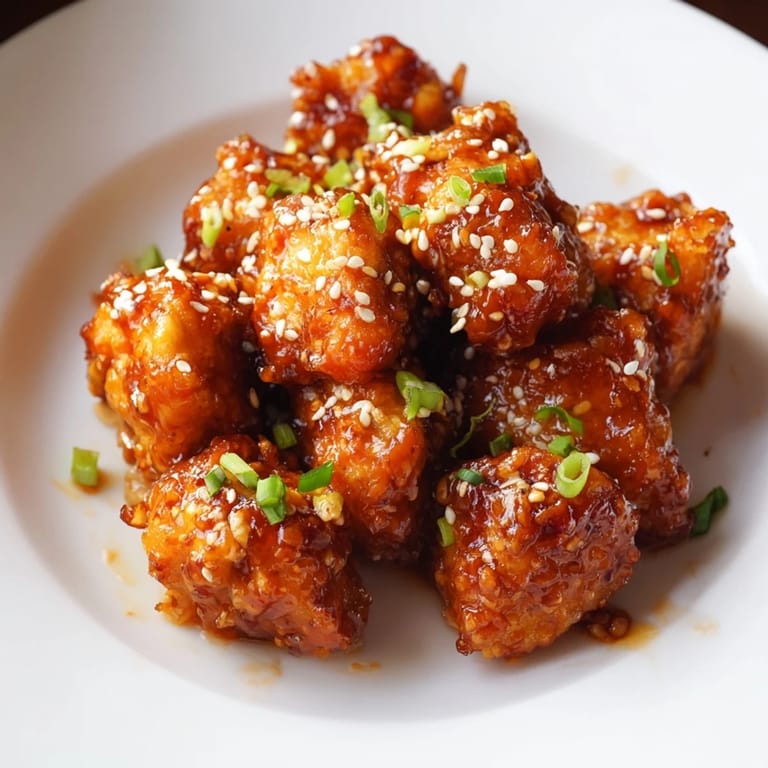
 My neighbor brought over these honey-sriracha chicken bites one evening, and I watched them disappear from the plate in minutes. Something about the way the glaze clung to each crispy piece, catching the light, made me ask for the recipe right then. That night, I decided these would be my secret weapon for every gathering, though honestly, the real secret is how uncomplicated they are once you understand the rhythm of coating, frying, and tossing.
I made these for a football watch party last fall, and two grown men actually got into a friendly argument over the last bite. Watching people unconsciously reach for another piece while talking, not even realizing how many they had eaten, taught me something about food that has nothing to do with recipes—it is about that moment when eating stops being polite and starts being real.
Ingredients
- Boneless, skinless chicken breasts: Start with 500 g cut into bite-sized cubes; they cook evenly and absorb the marinade quickly.
- Buttermilk: This 2 tablespoons does the heavy lifting, tenderizing the chicken while the flour clings to it.
- Garlic powder and onion powder: One teaspoon each builds flavor into every bite without needing fresh aromatics.
- All-purpose flour and cornstarch: The combination of 100 g flour and 50 g cornstarch creates that delicate, shattering crust.
- Paprika and cayenne: One teaspoon paprika brings warmth while half a teaspoon cayenne adds backbone without screaming heat.
- Vegetable oil: Use 500 ml in a deep skillet, heated to 175°C where it sizzles gently without smoking.
- Honey and Sriracha: Three tablespoons honey balances 2 tablespoons Sriracha so neither one bullies the other.
- Soy sauce, butter, and rice vinegar: The tablespoon of soy sauce adds umami while butter emulsifies the sauce into something glossy and clingy.
- Fresh garlic: One minced clove added to the warm sauce brings a subtle sharpness that ties everything together.
- Sesame seeds and chives: Finishing touches that add texture and a whisper of freshness to cut through the richness.
Tired of Takeout? 🥡
Get 10 meals you can make faster than delivery arrives. Seriously.
One email. No spam. Unsubscribe anytime.
Instructions
- Bathe the chicken in buttermilk:
- Combine your cubed chicken with buttermilk, garlic powder, onion powder, salt, and pepper in a bowl, coating every piece. Let it sit for at least 15 minutes while the buttermilk works its tender magic, though I often do this step while everything else gets prepped.
- Build your breading station:
- Mix flour, cornstarch, paprika, cayenne, and salt in a shallow dish so you can dredge one-handed without fumbling. This mix sits quietly, waiting, and it is ready whenever you are.
- Heat the oil patiently:
- Pour vegetable oil into your deep skillet and let it come to 175°C; use a thermometer here because eyeballing it is how you end up with pale, greasy chicken. The oil should shimmer and smell warm when you hold your hand above it, but not smoke.
- Coat and fry in batches:
- Pull each buttermilk-soaked piece through the flour mixture, pressing gently so the coating adheres, then slide them into the hot oil without crowding the pan. Fry for 4 to 5 minutes, turning occasionally with a slotted spoon, until each piece turns golden brown and sounds crispy when you tap it with the spoon.
- Make the glaze while chicken rests:
- While the chicken drains on paper towels, combine honey, Sriracha, soy sauce, butter, rice vinegar, and minced garlic in a small saucepan over medium heat. Stir continuously for 2 to 3 minutes until the butter melts and the sauce thickens slightly, becoming glossy and fragrant.
- Toss and finish:
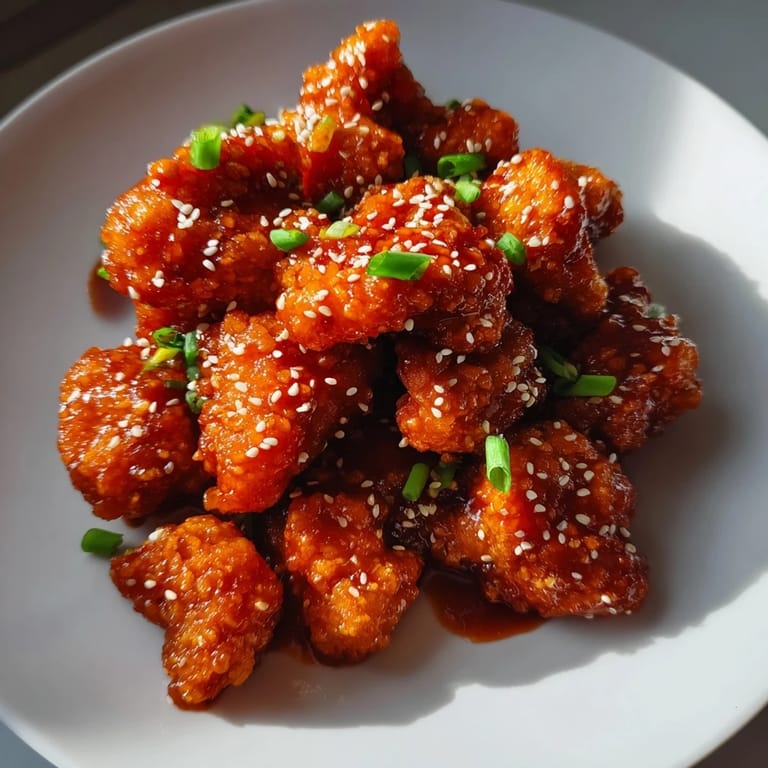
- Return the hot chicken pieces to a bowl, pour the warm sauce over them, and toss until every piece is coated in that sticky, golden-red glaze. Transfer to a serving platter and sprinkle with sesame seeds and chopped chives, then serve immediately while everything is still steaming.
 Merken
 The first time I nailed these was a Tuesday night when nothing else seemed to be going right, and somehow the rhythm of coating, frying, and glazing became meditative. By the end, standing over a platter of golden, sticky-sweet chicken bites, I realized cooking like this is how you reclaim a day, one bite at a time.
The Secret to Crispiness
The difference between soggy and shattering crust comes down to the cornstarch and the oil temperature working together. Cornstarch fries differently than flour alone, creating a delicate, glass-like shell that stays crispy even as the sauce coats it. I learned this when I once substituted cornstarch with more flour out of laziness and ended up with chicken that felt heavy instead of light, which taught me that shortcuts sometimes cost more than they save.
Building Spice Without Burning
The beauty of this glaze is how it lets the Sriracha shine without overwhelming anyone who does not want heat. The honey is not just a sweetener; it is a buffer that mellows the spice and adds body to the sauce. If you like things hotter, add more Sriracha to the saucepan, but do it gradually while tasting, because once it is in, you cannot take it back out.
Serving and Storage
These are best eaten fresh and warm, straight from the pan, but life is messy and sometimes you need to make them ahead. They keep in the refrigerator for up to three days in an airtight container, and you can reheat them gently in a low oven without drying them out. For a complete meal, serve them over steamed rice with a cooling side like ranch or blue cheese, which quiets the spice and turns an appetizer into dinner.
- Double-dip for extra crunch by coating each marinated piece twice, which takes one more minute but rewards you with an almost shattering texture.
- Keep paper towels within arm's reach of your frying station because draining the oil immediately is what keeps them light instead of heavy.
- Serve everything on warm plates because cold plates cool down the glaze and the chicken faster than you want, stealing some of the magic.
 Merken
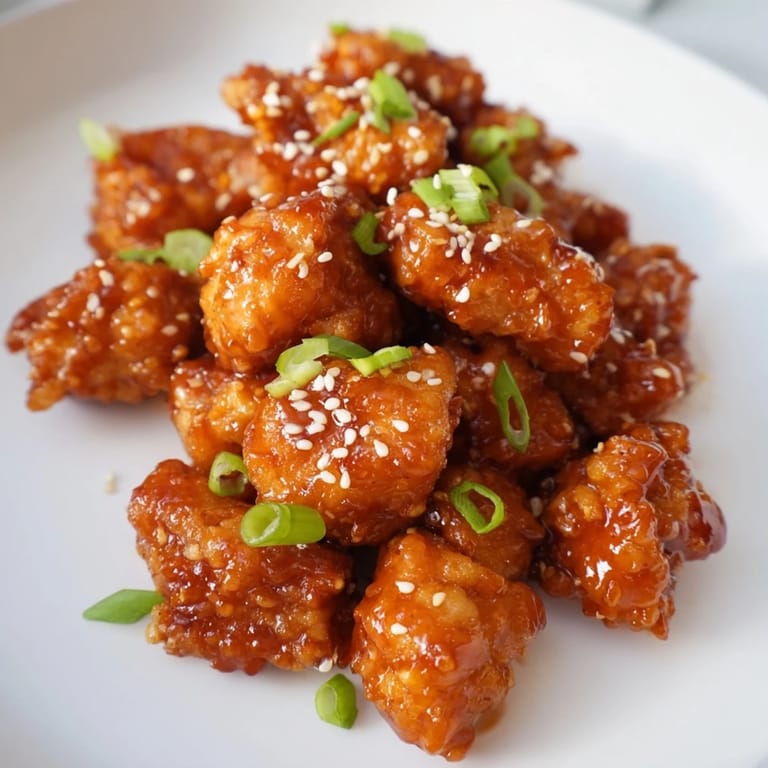
 These honey-sriracha bites have become the thing people ask me to make, not because the recipe is difficult, but because somehow it tastes like someone cared enough to spend time in the kitchen. That is worth showing up for.
Rezept FAQ
- → Wie kann ich die Schärfe anpassen?
Die Schärfe lässt sich leicht regulieren, indem die Menge der Sriracha-Sauce reduziert oder erhöht wird. Für eine mildere Variante einfach weniger Sriracha verwenden.
- → Kann ich die Panade glutenfrei gestalten?
Ja, ersetzen Sie das Weizenmehl durch eine glutenfreie Mehlmischung und verwenden Sie statt Sojasauce Tamari, um das Gericht glutenfrei zu halten.
- → Wie bekomme ich die Panade besonders knusprig?
Für eine extra knusprige Textur empfiehlt sich das doppelte Eintauchen in Buttermilch und Paniermehl vor dem Frittieren.
- → Welche Beilagen passen gut dazu?
Diese Hähnchenstücke harmonieren hervorragend mit gedämpftem Reis oder cremigen Dips wie Ranch oder Blauschimmelkäse.
- → Kann ich das Gericht auch im Ofen zubereiten?
Ja, backen Sie die panierten Huhnstücke bei 200°C bis sie goldbraun und knusprig sind, um eine fettärmere Alternative zum Frittieren zu erhalten.