 Merken
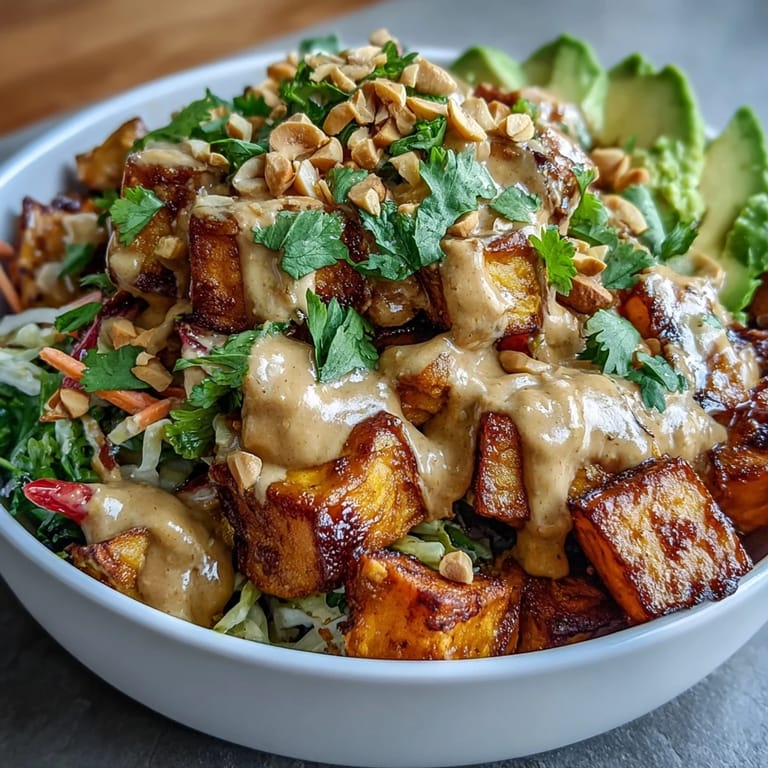
 My kitchen got quiet one afternoon when a friend mentioned she'd been eating the same sad desk lunch for weeks. Something about that stuck with me, so I started experimenting with bowls that could hold actual flavor and color without feeling like I was trying too hard. This Thai peanut sweet potato version emerged from tossing whatever vibrant vegetables were around, a jar of peanut butter, and the lime that was somehow always in my fruit bowl. The first time I made it for her, she actually sat down to eat instead of eating standing up at the counter. That felt like a small win.
I made this for a potluck once where everyone brought something overthought. My bowl sat there simple and honest, and three different people asked for the recipe before dessert even arrived. Watching someone taste the combination of warm roasted potato and cold crisp cabbage with that peanut sauce on top, that moment when their expression shifts, that's when I knew this wasn't just a lunch idea.
Ingredients
- Sweet potatoes: Medium ones work better than huge ones because they roast more evenly and get that caramelized edge that makes the whole bowl sing.
- Olive oil: Don't skip this for the potatoes; it's what turns them from soft to actually crispy in spots.
- Broccoli florets: Raw broccoli here brings a satisfying bite that balances the warm elements, though cauliflower works just as well if that's what you have.
- Shredded cabbage: This stays crisp and picks up the sauce beautifully; red cabbage adds visual pop if you're feeling it.
- Grated carrots: Sweet and crunchy, they add another layer of texture that keeps each bite interesting.
- Avocado: If you're using it, slice it just before assembling so it doesn't brown and lose its creamy appeal.
- Peanut butter: Full-fat or natural works best; the emulsifiers in some commercial brands can make the sauce feel thin or separated.
- Soy sauce: This is your umami anchor; don't underestimate how much depth it adds to sweet elements.
- Maple syrup: It dissolves faster into the sauce than honey and doesn't leave a grainy texture.
- Lime juice: Fresh lime is crucial here because the acidity balances the richness and brings everything into focus.
- Sesame oil: Just a tablespoon adds a toasty note that feels almost impossible to achieve otherwise.
- Cilantro: Fresh herbs matter more than you might think; they brighten the whole bowl and cut through richness.
- Peanuts for garnish: Chopped rather than whole because they distribute the crunch evenly with each spoonful.
Tired of Takeout? 🥡
Get 10 meals you can make faster than delivery arrives. Seriously.
One email. No spam. Unsubscribe anytime.
Instructions
- Get your oven ready:
- Preheat to 400°F (200°C) so the heat is ready when you are, which makes a real difference in getting those crispy edges on the potatoes.
- Prepare the sweet potatoes:
- Toss your diced pieces with olive oil, salt, and pepper, then spread them on a baking sheet in a single layer. They need space to roast properly, not steam, so don't overcrowd.
- Roast with intention:
- Let them go for 25 to 30 minutes, stirring halfway through so every piece gets exposure to the heat. You're looking for golden edges and a fork-tender center.
- Build your vegetable lineup:
- While potatoes are roasting, prep all your raw vegetables and arrange them where you can see them. This takes the stress out of assembly later and honestly feels good to do.
- Make the sauce:
- Whisk together peanut butter, soy sauce, maple syrup, lime juice, and sesame oil until it's smooth and pourable. If it feels too thick, add warm water a tablespoon at a time until it coats the back of a spoon.
- Bring it together:
- Divide the roasted sweet potatoes among four bowls, then arrange your vegetables around them like you're creating something you actually want to look at. Drizzle the sauce generously over everything.
- Finish with flair:
- Top each bowl with fresh cilantro and chopped peanuts so every bite has texture and freshness. Serve right away while the warm and cold elements still feel intentional.
 Merken
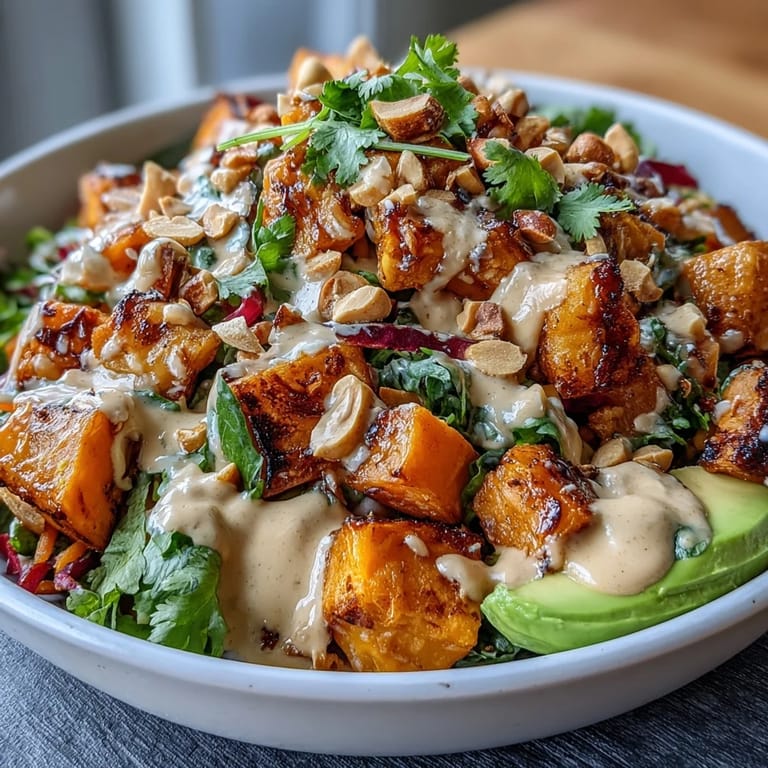
 There's something about a bowl that makes people slow down. My mom, who usually power-eats while checking her phone, actually sat with mine for twenty minutes the first time I brought it over. She asked about the vegetables, the sauce, whether I could make it again for her book club. That's when I realized this recipe works because it respects both nutrition and pleasure at the same time.
How to Make Components Ahead
The potatoes keep beautifully in an airtight container for three days and can be eaten cold or reheated gently in a pan. The sauce also holds well, though it thickens as it sits, so bring it back to pourable consistency with a splash of warm water. Chop your vegetables in advance too, storing them in the coldest part of your fridge so they stay crisp and ready to assemble whenever hunger strikes.
Protein Options and Flexibility
This bowl welcomes additions without losing its identity. Baked tofu adds a subtle protein that doesn't fight the other flavors, while roasted chickpeas bring texture and earthiness. If you want something more substantial, a bed of quinoa or brown rice transforms this into a completely different meal that still tastes like itself.
Troubleshooting and Variations
Sometimes sweet potatoes roast faster or slower depending on how you cut them and your oven's personality. If yours look done at 20 minutes, take them out; if they're still firm at 30, give them five more. The bowl adapts to whatever you have on hand, whether that's radishes instead of carrots or spinach instead of cabbage.
- For nut-free versions, sunflower seed butter in the sauce and sunflower seeds as garnish work exactly as well as peanuts.
- Red cabbage adds visual drama and doesn't change the flavor profile in any significant way.
- A squeeze of sriracha or a pinch of chili flakes can be mixed into the sauce if you want heat without actually making it spicy.
 Merken
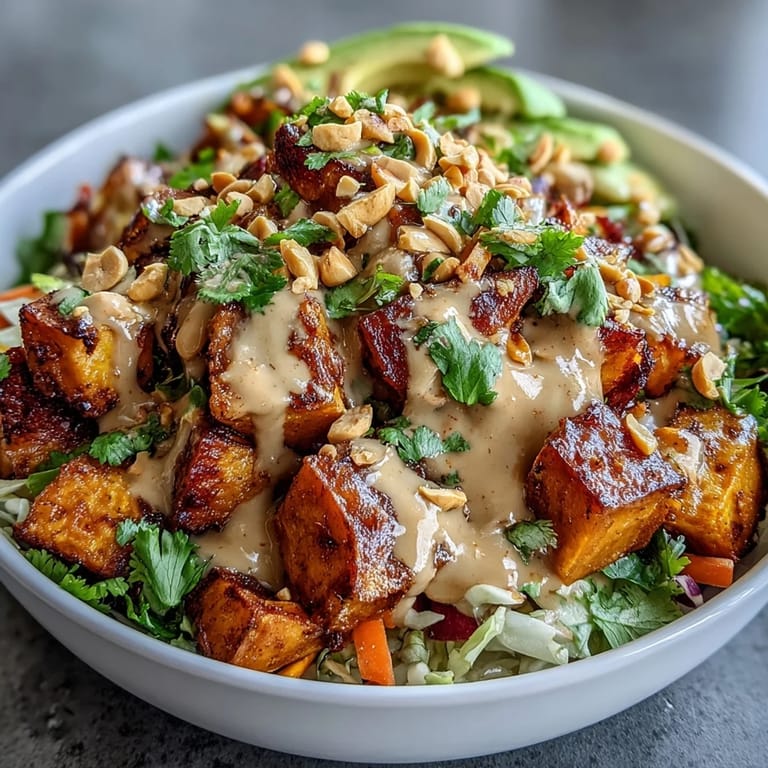
 This bowl became my answer to the question I didn't know I was asking: how do you make food that feels good to eat and good to look at without pretending it's complicated? Every time someone comes back for seconds or asks for the recipe, I'm reminded that simple done thoughtfully is its own kind of magic.
Rezept FAQ
- → Wie werden die Süßkartoffeln am besten zubereitet?
Die Süßkartoffeln werden gewürfelt, mit Olivenöl, Salz und Pfeffer vermengt und im Ofen bei 200°C goldbraun und knusprig geröstet.
- → Welche Alternativen gibt es zur Erdnussbutter?
Man kann Mandelbutter oder Sonnenblumenkernbutter verwenden, um Allergien oder Unverträglichkeiten zu vermeiden.
- → Kann ich diese Schale vegan und glutenfrei gestalten?
Ja, durch die Verwendung von Tamari statt Sojasauce und Ahorn- oder Agavendicksaft bleibt die Mahlzeit vegan und glutenfrei.
- → Wie kann die Schale noch proteinreicher gemacht werden?
Zusatz von gebackenem Tofu oder Kichererbsen erhöht den Proteingehalt.
- → Welche frischen Zutaten eignen sich für das Gemüse?
Brokkoli, Kraut, Karotten und Avocado sorgen für frische Farb- und Geschmackskontraste.